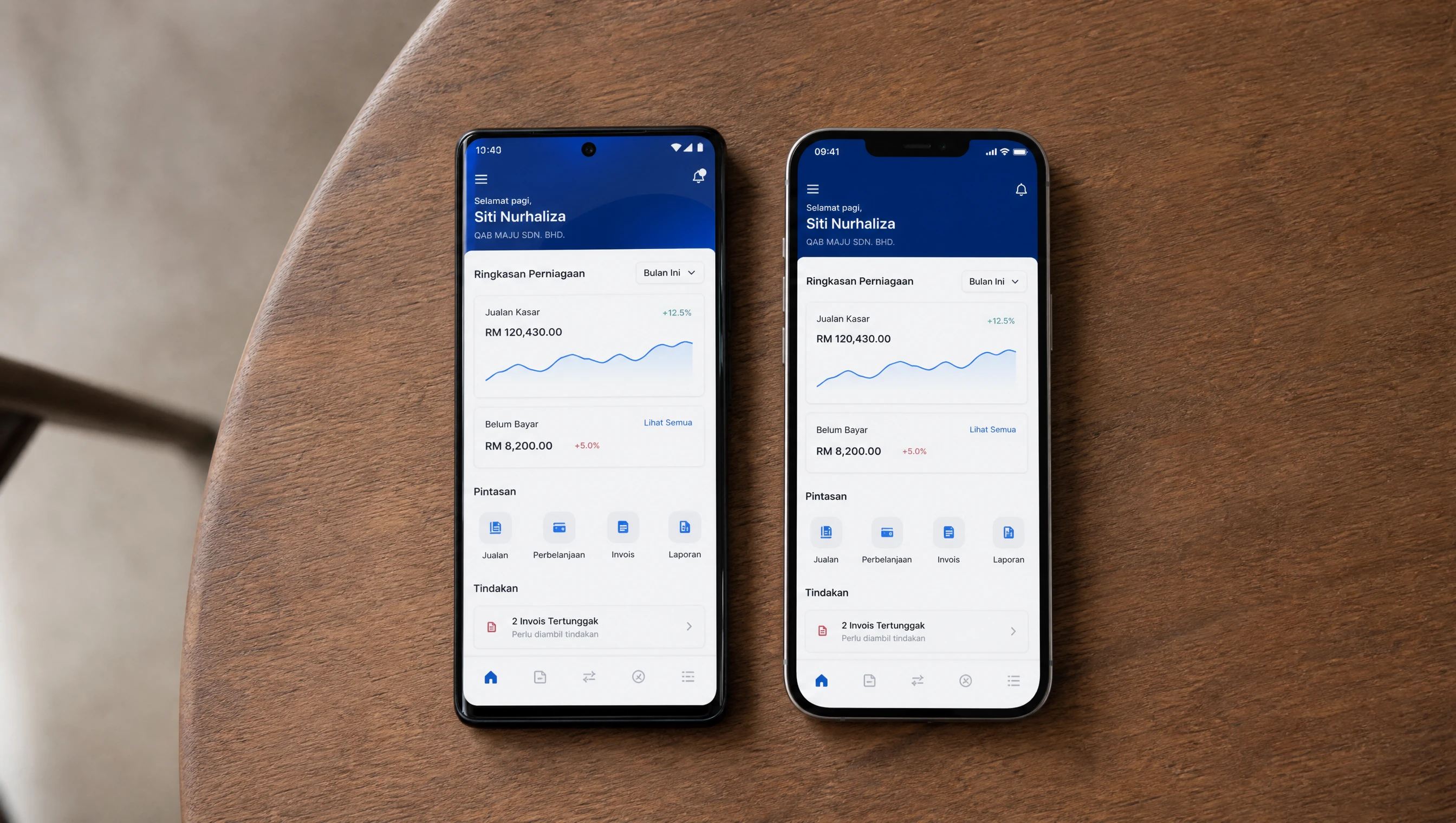
A native shopping app for a Malaysian brand starts around RM18,000 for a launch build and around RM38,000 for a full mobile store. A realistic timeline is 10 to 16 weeks. And the thing most merchants have backwards: Apple and Google take **no** commission on your physical product sales.
The 30% commission myth
This is the first question almost every merchant asks: "If I sell in the app, does Apple take 30%?" The answer is no — and not because of a loophole. Apple specifically **prohibits** you from using in-app purchase for physical goods.
App Store Review Guideline 3.1.3(e), "Goods and Services Outside of the App", states that if your app enables people to purchase physical goods or services consumed outside the app, you **must** use a purchase method other than in-app purchase.
| What you sell | Payment method | Apple / Google commission |
|---|---|---|
| Clothing, shoes, accessories | Your own payment gateway | **0%** |
| Food, groceries | Your own payment gateway | **0%** |
| Real-world service bookings | Your own payment gateway | **0%** |
| Digital content subscriptions | In-app purchase | 15–30% |
| Premium in-app features | In-app purchase | 15–30% |
The mistake runs both ways. Using in-app purchase for physical goods is itself grounds for rejection at review. Matching the payment method to the product type is the part developers most often get backward.
For a physical-goods store this means you pay ordinary payment gateway fees — roughly 2–3% per transaction for FPX and cards — and nothing else. Set that against marketplace commissions that can reach low double digits, plus in-platform advertising fees on top.
Why native rather than a webview wrapper
Some vendors offer an RM3,000 "app" that is your website wrapped in a webview. It gets an icon and a store listing, but it is not an app. The differences your customers feel:
- **Speed** — catalogue scrolling stutters in a webview; in Swift or Kotlin it is smooth
- **Push notifications** — webviews generally cannot deliver reliable push, and push is the main reason an app earns its keep
- **Offline** — customers can browse products they have already opened when the connection drops
- **Camera, biometrics, wallet** — full access to device capabilities
- **Store approval** — thin webview apps are routinely rejected by Apple for offering nothing beyond the mobile website
If Apple rejects your app for not providing value beyond a mobile website, fixing a webview usually means rebuilding it. Building it properly once is cheaper than paying twice.
Store account costs and the obstacle nobody mentions
| Item | Cost | Frequency |
|---|---|---|
| Apple Developer Program | USD 99 | Annual |
| Google Play Console | USD 25 | One-time |
| Malaysian payment gateway | ~2–3% per transaction | Ongoing |
At roughly RM4.40 to the dollar, the first year across both stores is about RM550, then about RM440 a year for Apple. Small against build cost, but it belongs in the budget because these accounts are in your name, not your vendor's.
The real obstacle on Android is not the fee. New personal developer accounts must pass identity verification and complete a closed testing requirement with 12 testers before they can publish. That can add two to four weeks to your launch, and it catches teams off guard because nobody raises it at quotation stage. Start the account registration in week one of the project, not the last week.
What each tier includes
| Launch — RM18,000 | Growth — RM38,000 | |
|---|---|---|
| Platforms | iOS (Swift) + Android (Kotlin) | Same |
| Catalogue | Products and cart | Unlimited products and categories |
| Payments | 1 gateway (FPX or cards) | FPX, cards and e-wallets |
| Customer accounts | Basic | Full accounts and wishlists |
| Notifications | Push notifications | Push plus segmented campaigns |
| Promotions | — | Loyalty and promo codes |
| Fulfilment | Order tracking | Shipping and order management |
| Admin | — | Dashboard and analytics |
| Publishing | App Store + Google Play | Same |
| Support | 1 month | 3 months |
If you already run an online store, integrating with the existing system is usually cheaper than building a new backend — though that depends entirely on whether your platform exposes a sane API.
When you should not build an app
Agencies rarely write this section because it argues against the sale. But a mistimed app is the most expensive item on this page.
- 1**Your repeat purchase rate is low.** Apps pay back through returning customers. If people buy from you once a year, they will not keep your app installed.
- 2**Your website is not finished.** If your web checkout leaks customers, the app will leak them the same way and cost more to fix.
- 3**You have no customer list yet.** An app does not create demand. It serves demand that already exists.
- 4**Your catalogue is small and static.** Five products that rarely change do not need an app.
The practical threshold we use: when more than a third of sales come from repeat customers and you have already moved a meaningful share of traffic to your own channels, an app starts to make sense. Before that, the same money does more in the website and in marketing.
A realistic timeline
| Phase | Duration | What happens |
|---|---|---|
| Scope and design | 2–3 weeks | Flows, wireframes, UI for both platforms |
| Build | 6–10 weeks | Swift and Kotlin, backend, gateway integration |
| Testing | 1–2 weeks | Real devices, test transactions, edge cases |
| Store publishing | 1–2 weeks | Apple review, Google closed testing |
Apple review usually takes a few days, but a first rejection is routine and not a sign the project has gone wrong. Budget for one round of corrections.
Tax treatment
Development cost for a custom app qualifies for capital allowance — 40% in year one, 20% a year after. An RM38,000 app relieves roughly RM6,460 of tax in the 17% band. Full details and how the invoice should be itemised are in capital allowance for custom software.
Still deciding whether the website or the app comes first? We compare them in ecommerce app vs website. For scope and pricing, see the Ecommerce App Development page.
Running an online store and want to know whether an app is worth it at your repeat-customer volume?
Talk it through with usBuild With Us
Want to build a website for your business?
First consultation is free — no commitment. Contact us directly via WhatsApp and get a tailored recommendation within 24 hours.
Contact Us Now